
Research Description
The main focus of our group “Functional Host-Microbiome Research” is the role of the interactions between the host and its associated microorganisms – the microbiome. Microorganisms have historically been regarded solely as pathogens from which we need to protect ourselves from and to that end developed a sophisticated immune system. In the past years we and others have shown that we all live in close association with a vast diversity of microorganisms that not only contribute to various physiological processes including our immune responses, metabolism and even behavior, but also protect from pathogenic infections. Dysbiosis, meaning disturbances of these homeostatic host-microbiome interactions, are associated with a range of inflammatory, metabolic and other diseases. However, the involved molecular pathways and the functional impact of these associations largely remain to be elucidated. We employ a combination of gnotobiotic in vivo conditional knockout models, functional in vitro organoid systems and novel high-throughput “omics” technologies such as next generation sequencing or metabolomics to delineate the function of host-microbiome interactions and develop microbiome-based interventions for common metabolic and inflammatory disorders.
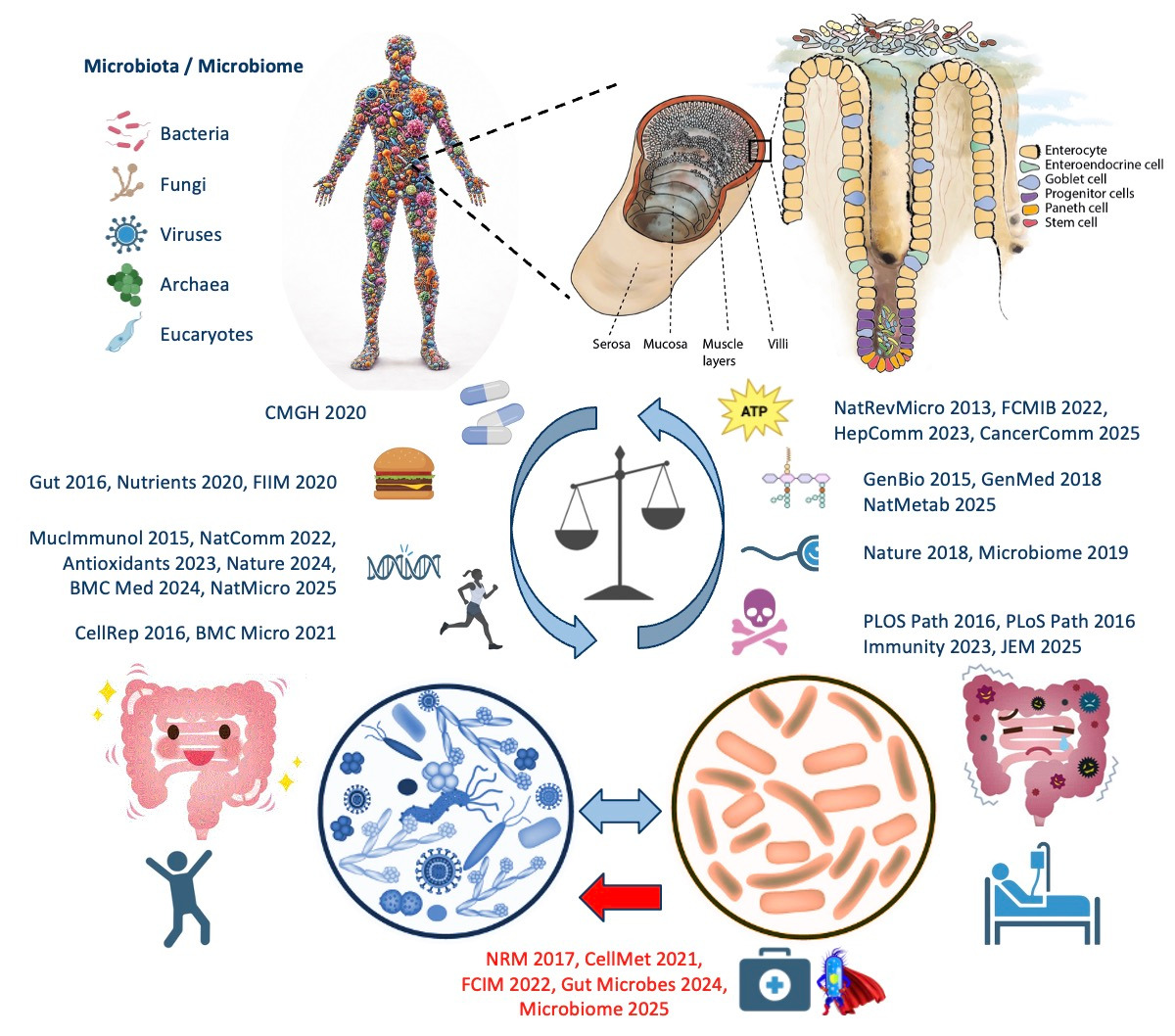
Main Projects
Therapeutic targeting of hexokinase in intestinal inflammation
Introduction: Inflammation is characterized by changes in metabolic activity, in particular glucose metabolism. Hexokinase (HK) catalyzes the first step of glycolysis limiting its pace. During phase I of miTarget, we found that epithelial HK2 expression is upregulated in the inflamed mucosa of patients with intestinal inflammation and correlates with disease severity (1). We further revealed that, in mice, ablation of HK2 in intestinal epithelial cells (IEC) protects from colitis congruent with suppressed cell death and altered mitochondrial function, and that the microbial metabolite butyrate inhibits HK2 by signaling through histone deacetylase 8 (HDAC8) and thereby protects from acute inflammation (2). Thus, targeting HK2 through microbiome manipulation presents as an attractive therapeutic approach during intestinal inflammation.
Aims: We now aim to build upon these findings by elucidating the precise molecular mechanism how HK2-inhibition protects from inflammation, investigating the transcriptional regulatory landscape how the microbiome controls HK2 via butyrate and HDAC8, and testing newly identified specific HK2 inhibitors as well as pro- and prebiotics for their potential to modulate colitis susceptibility in mice as trials with butyrate in IBD patients had to be discontinued due to side-effects related to its chemical nature.
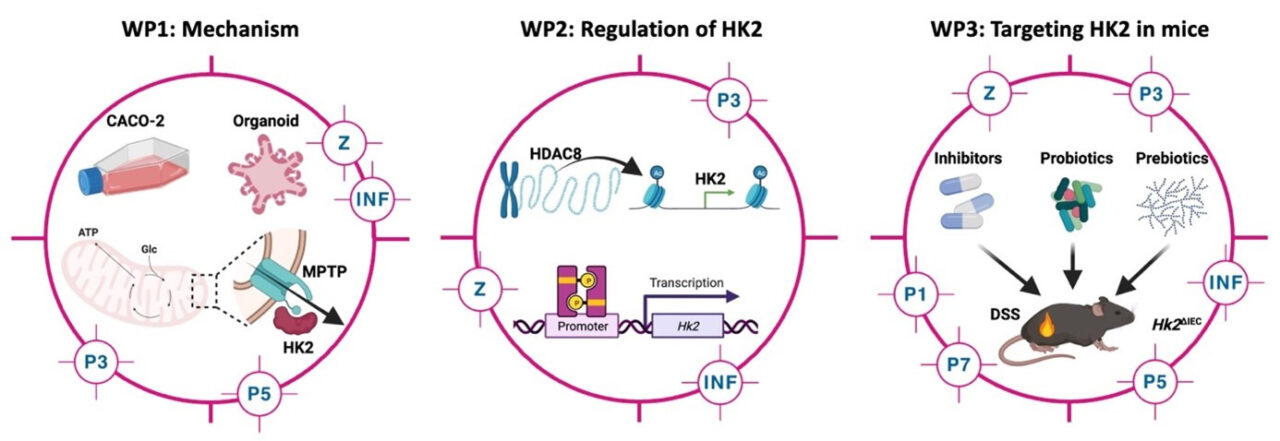
Outlook: This project promises to reveal druggable molecular targets in the microbiome-HK2 axis that then can be translated into the clinic to treat intestinal inflammation.
Funding: This project is part of the DFG-funded research unit 5042 “miTarget – The Microbiome as a Therapeutic Target in Inflammatory Bowel Diseases”. For further information, see https://www.mitarget.org
Project-related publications
-
BMC Medicine
·
Hexokinase 2 expression in apical enterocytes correlates with inflammation severity in patients with inflammatory bowel disease
Weber-Stiehl S, Taubenheim J, Järke L, Röcken C, Schreiber S, Aden K, Kaleta C, Rosenstiel P, Sommer F
-
Frontiers in Microbiology
·
Mitochondrial Function and Microbial Metabolites as Central Regulators of Intestinal Immune Responses and Cancer
Weber-Stiehl S, Järke L, Castrillón-Betancur JC, Gilbert F, Sommer F
-
Cell Metabolism
·
Microbial regulation of hexokinase 2 links mitochondrial metabolism and cell death in colitis
Hinrichsen F, Hamm J, Westermann M, Schröder L, Shima K, Mishra N, Walker A, Sommer N, Klischies K, Prasse D, Zimmermann J, Kaiser S, Bordoni D, Fazio A, Marinos G, Laue G, Imm S, Tremaroli V, Basic M, Häsler R, Schmitz RA, Krautwald S, Wolf A, Stecher B, Schmitt-Kopplin P, Kaleta C, Rupp J, Bäckhed F, Rosenstiel P, Sommer F

Role of epithelial reactive oxygen production for interactions with the microbiome
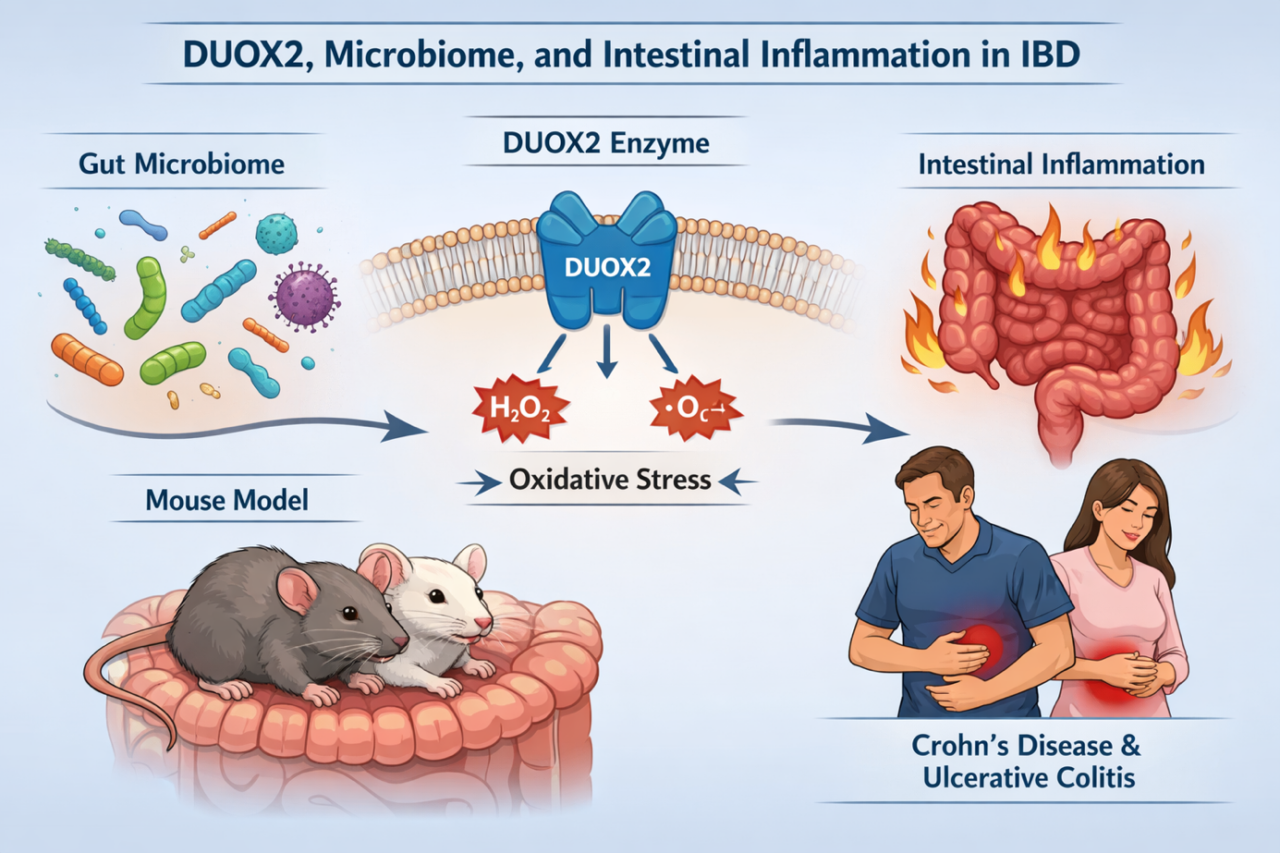
Introduction: Reactive oxygen species (ROS) serve as one line of defense against pathogenic infection due to their high antibacterial activity. However, chronic or overactivation of ROS production also leads to tissue and DNA damage and thereby to susceptibility for inflammation and cancer. In previous work we identified the microbiome as potent regulator of intestinal epithelial ROS responses (Sommer & Bäckhed 2015 Mucosal Immunology; Sommer et al. 2015 Genome Biology). This led us to hypothesize that intestinal ROS production critically determines host-microbiome interactions and thereby intestinal physiology.
Aims: Our goal is to decipher the function of epithelial ROS production for the selection of the microbiome and how defects in this process may affect susceptibility to intestinal inflammation, cancer and metabolic disease.
How to get there: We will investigate the phenotype and disease susceptibility along with the microbiome of mice lacking the key ROS-producing enzyme DUOX2 in the intestinal epithelium. Additionally, we also screened DUOX2-microbiome interactions in human IBD patients.
Our findings (so far): DUOX2-produced reactive oxygen species (ROS) control intestinal microbiome composition and its epithelial deletion protects from experimental colitis in mice. In humans, IBD patients with high DUOX2 expression display a dysbiotic microbiome. Therefore, dysregulated DUOX2-microbiome interactions associate with intestinal inflammation in both mice and humans. For more details see our published article: Link to article
Project-related publications
-
Antioxidants
·
Epithelial Dual Oxidase 2 Shapes the Mucosal Microbiome and Contributes to Inflammatory Susceptibility
Castrillón-Betancur JC, López-Agudelo VA, Sommer N, Cleeves S, Bernardes JP, Weber-Stiehl S, Rosenstiel P, Sommer F
-
Immunity
·
Endoplasmic reticulum stress in the intestinal epithelium initiates purine metabolite synthesis and promotes Th17 cell differentiation in the gut
Duan J, Matute JD, Unger LW, Hanley T, Schnell A, Lin X, Krupka N, Griebel P, Lambden C, Sit B, Grootjans J, Pyzik M, Sommer F, Kaiser S, Falk-Paulsen M, Grasberger H, Kao JY, Fuhrer T, Li H, Paik D, Lee Y, Refetoff S, Glickman JN, Paton AW, Bry L, Paton JC, Sauer U, Macpherson AJ, Rosenstiel P, Kuchroo VK, Waldor MK, Huh JR, Kaser A, Blumberg RS
-
Mucosal Immunology
·
The gut microbiota engages different signaling pathways to induce Duox2 expression in the ileum and colon epithelium
Sommer F, Bäckhed F
HKDC1 and its role in intestinal inflammation and carcinogenesis
Introduction: Hexokinases catalyze the first and pace-making reaction of glycolysis. HKDC1 is a novel “fifth” hexokinase isoform (Ludvik et al. 2016 Endocrinology) and strongly expressed in the epithelium of the intestinal tract (Sommer et al. 2015 Genome Biology). HKDC1 expression is dysregulated in chronic inflammatory disease (Häsler et al. 2012 Genome Research) and modulated by the intestinal microbiota (Sommer et al. 2015 Genome Biology). As HKDC1 expression is highly specific for intestinal epithelial cells and microbial effects as well as metabolic changes are tightly linked to the pathogenesis of inflammatory bowel disease or colorectal cancer, HKDC1 comes into our focus as a factor that possibly modulates susceptibility for inflammatory bowel disease and cancer in a microbiota-dependent manner.
Aims: Our goal is to understand the interactions between the intestinal microbiome and HKDC1 along with its role for disease susceptibility. Simultaneously, we aim to identify microbial factors that regulate HKDC1 expression as candidates for microbiome-targeted disease therapies.
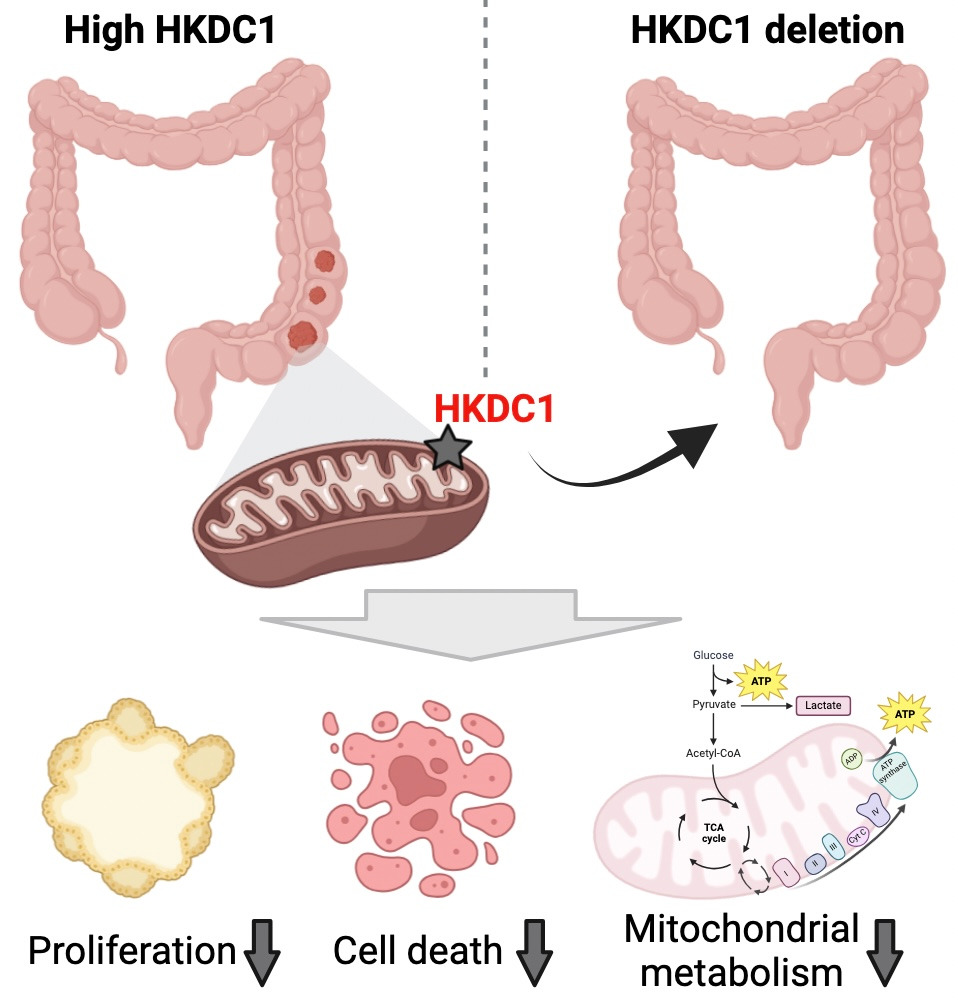
How to get there: We will investigate the phenotype and disease susceptibility of mice lacking HKDC1 in the intestinal epithelium. Additionally, we will screen for microbial factors regulating HKDC1 expression using in vitro assays.
Our findings (so far): We found that deletion of the unconventional hexokinase HKDC1 alters various hallmarks of cancer cells including proliferation, cell death and mitochondrial metabolism, and thereby protects from intestinal carcinogenesis. These findings are exciting because they highlight a new way to treat colon cancer. For more details see our published article: Link to article
Project-related publications
-
Cancer Communications (Lond)
·
Deletion of epithelial HKDC1 decelerates cellular proliferation and impairs mitochondrial function of tumorous epithelial cells thereby protecting from intestinal carcinogenesis
Järke L, Weber-Stiehl S, Shima K, Moors KA, Genth J, Schuran FA, Best L, Tschurtschenthaler M, Flemer B, Lüschen S, Röcken C, Tholey A, Kaleta C, Rupp J, Rosenstiel P, Sommer F
-
Frontiers in Microbiology
·
Mitochondrial Function and Microbial Metabolites as Central Regulators of Intestinal Immune Responses and Cancer
Weber-Stiehl S, Järke L, Castrillón-Betancur JC, Gilbert F, Sommer F
Project leader
-

PD Dr. Felix Sommer
Principal Investigator+49(0) 431 500-15146
Team
-

Saskia Weber-Stiehl
PhD-student+49(0) 431 500-30312
-

Lea Järke
Clinician Scientist+49(0) 431 500-30312
-

Hongshu Huang
PhD-student+49(0) 431 500-30312
-

Xue Gu
PhD-student+49(0) 431 500-30312
-

Xiangyu Meng
PhD-student+49(0) 431 500-30312
-

Halil Furkan Tuna
Master student+49(0) 431 500-30312
-

Caroline Biju Kurian
Master student+49(0) 431 500-30312
-

Imranur Rahman
Master student+49(0) 431 500-30312
-

Raquel Carvalho
Master student+49(0) 431 500-30312
-

Leonie Essink
Master student, Student assistant+49(0) 431 500-30312
-

Handan Müftüoglu
Assistance
Publications
-
Microbiome
·
Life-long microbiome rejuvenation improves intestinal barrier function and inflammaging in mice
Sommer F, Bernardes JP, Best L, Sommer N, Hamm J, Messner B, López-Agudelo VA, Fazio A, Marinos G, Kadibalban AS, Ito G, Falk-Paulsen M, Kaleta C, Rosenstiel P
-
Cancer Communications (Lond)
·
Deletion of epithelial HKDC1 decelerates cellular proliferation and impairs mitochondrial function of tumorous epithelial cells thereby protecting from intestinal carcinogenesis
Järke L, Weber-Stiehl S, Shima K, Moors KA, Genth J, Schuran FA, Best L, Tschurtschenthaler M, Flemer B, Lüschen S, Röcken C, Tholey A, Kaleta C, Rupp J, Rosenstiel P, Sommer F
-
MC Medicine
·
Hexokinase 2 expression in apical enterocytes correlates with inflammation severity in patients with inflammatory bowel disease
Weber-Stiehl S, Taubenheim J, Järke L, Röcken C, Schreiber S, Aden K, Kaleta C, Rosenstiel P, Sommer F
-
Antioxidants (Basel)
·
Epithelial Dual Oxidase 2 Shapes the Mucosal Microbiome and Contributes to Inflammatory Susceptibility
Castrillón-Betancur JC, López-Agudelo VA, Sommer N, Cleeves S, Bernardes JP, Weber-Stiehl S, Rosenstiel P, Sommer F
-
Cell Metabolism
·
Microbial regulation of hexokinase 2 links mitochondrial metabolism and cell death in colitis
Hinrichsen F, Hamm J, Westermann M, Schröder L, Shima K, Mishra N, Walker A, Sommer N, Klischies K, Prasse D, Zimmermann J, Kaiser S, Bordoni D, Fazio A, Marinos G, Laue G, Imm S, Tremaroli V, Basic M, Häsler R, Schmitz RA, Krautwald S, Wolf A, Stecher B, Schmitt-Kopplin P, Kaleta C, Rupp J, Bäckhed F, Rosenstiel P, Sommer F