
Research Description
In aging Western societies, cancer represents one of the most pressing medical challenges. A hallmark of tumors is the deregulation of signaling pathways that profoundly alter the transcriptional profile of cancer cells. Transcription factors of the MYC family play a pivotal role in this oncogenic reprogramming.
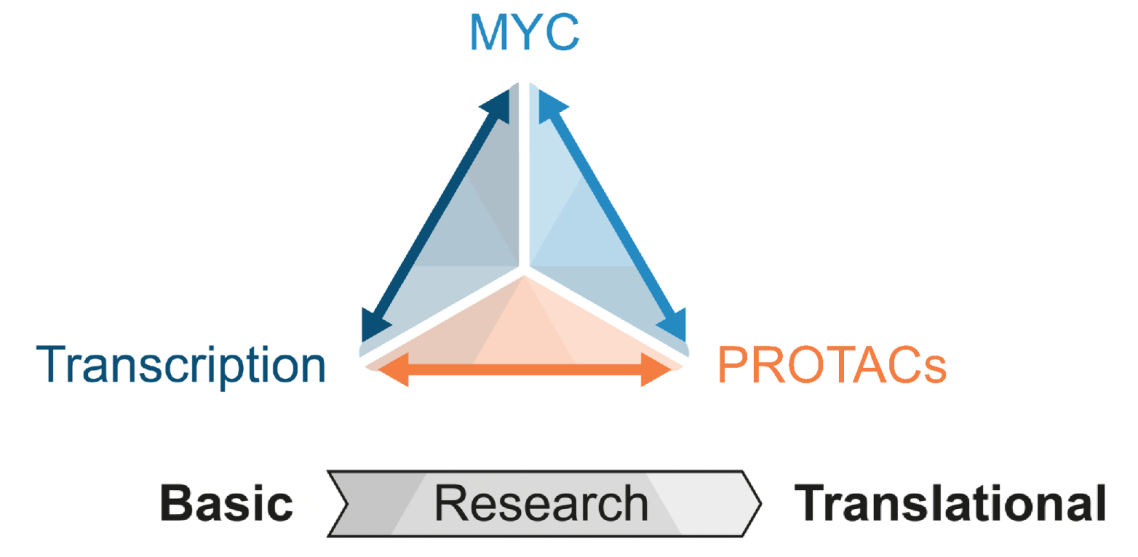
Our vision is to understand the transcriptional alterations that occur during tumorigenesis—particularly the oncogenic function of MYC—at a level that enables the development of novel pharmacological strategies for cancer therapy. To this end, our group employs genome- and proteome-wide approaches to comprehensively characterize tumor biology, as well as genetic screenings to identify new therapeutic vulnerabilities. In collaboration with our partners, we subsequently develop compounds that interfere with the oncogenic functions of these target proteins. A particular focus lies on the development of so-called PROTACs (Proteolysis Targeting Chimeras), which enable the selective degradation of tumor-promoting proteins. In the coming years, we aim to advance these PROTACs to the stage of clinical testing and, ultimately, therapeutic application.
Main Projects
The Wolf research program is divided into two complementary branches. A major part of the researchers in the Section of Tumor Biochemistry at the Institute of Biochemistry, Kiel University, investigates the molecular mechanisms underlying oncogenic transcription factors and inflammatory processes, with the aim of understanding their roles in tumorigenesis and disease development.
In the Research Group for Translational Proteolysis Research at the Institute of Experimental Medicine, these mechanistic insights are translated into novel therapeutic concepts using PROTAC (proteolysis-targeting chimera) technology. In particular, we pursue these translational approaches within two major externally funded research projects (Excellencecluster PMI; Research project funded by the German Cancer AID), aiming to develop targeted protein degradation strategies for the treatment of cancer and chronic inflammatory diseases.


Our offices are located at Biochemical Insitute, Rudolph-Höber-Str. 1.
Project leader
-
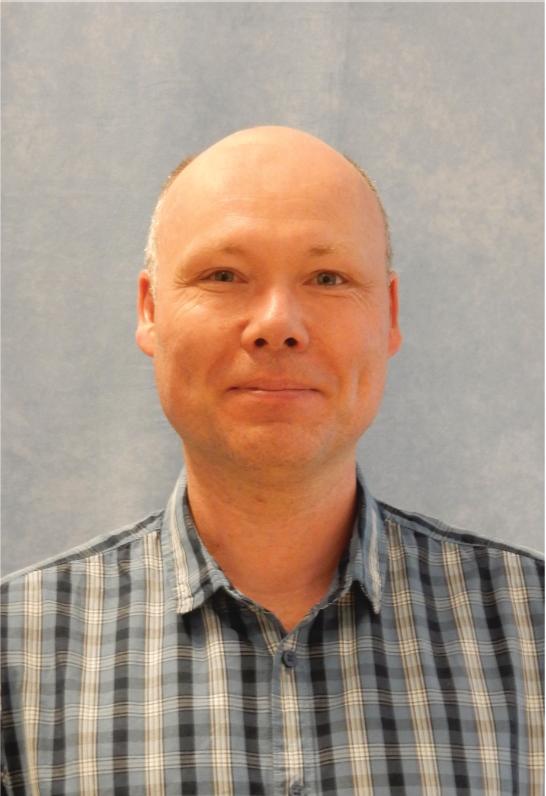
Prof. Dr. Elmar Wolf
Principal Investigator
Team
-

Raddur Samaddar
PhD-student -

Jahnve Gupta
PhD-student -

Handan Müftüoglu
Assistance
Publications
-
Nucleic Acids Research
·
Phenotypic screens identify SCAF1 as critical activator of RNAPII elongation and global transcription
Bhandare P, Narain A, Hofstetter J, Rummel T, Wenzel J, Schülein-Völk C, Lamer S, Eilers U, Schlosser A, Eilers M, Erhard F, Wolf E
-
Gut
·
Targeting MYC effector functions in pancreatic cancer by inhibiting the ATPase RUVBL1/2
Vogt M, Dudvarski Stankovic N, Cruz Garcia Y, Hofstetter J, Schneider K, Kuybu F, Hauck T, Adhikari B, Hamann A, Rocca Y, Grysczyk L, Martin B, Gebhardt-Wolf A, Wiegering A, Diefenbacher M, Gasteiger G, Knapp S, Saur D, Eilers M, Rosenfeldt M, Erhard F, Vos SM, Wolf E
-
Nature
·
MYC multimers shield stalled replication forks from RNA polymerase
Solvie D, Baluapuri A, Uhl L, Fleischhauer D, Endres T, Papadopoulos D, Aziba A, Gaballa A, Mikicic I, Isaakova E, Giansanti C, Jansen J, Jungblut M, Klein T, Schülein-Völk C, Maric H, Doose S, Sauer M, Beli P, Rosenwald A, Dobbelstein M, Wolf E*, Eilers M*
-
Nature Chemical Biology
·
PROTAC-mediated degradation reveals a non-catalytic function of AURORA-A kinase
Adhikari B, Bozilovic J, Diebold M, Schwarz JD, Hofstetter J, Schröder M, Wanior M, Narain A, Vogt M, Dudvarski Stankovic N, Baluapuri A, Schönemann L, Eing L, Bhandare P, Kuster B, Schlosser A, Heinzlmeir S, Sotriffer C, Knapp S, Wolf E
-
Nature
·
Activation and repression by oncogenic MYC shape tumour-specific gene expression profiles
Walz S, Lorenzin F, Morton J, Wiese KE, von Eyss B, Herold S, Rycak L, Dumay-Odelot H, Karim S, Bartkuhn M, Roels F, Wüstefeld T, Fischer M, Teichmann M, Zender L, Wei CL, Sansom O, Wolf E*, Eilers M*